All Creatures Great and Small

IMG_1006 

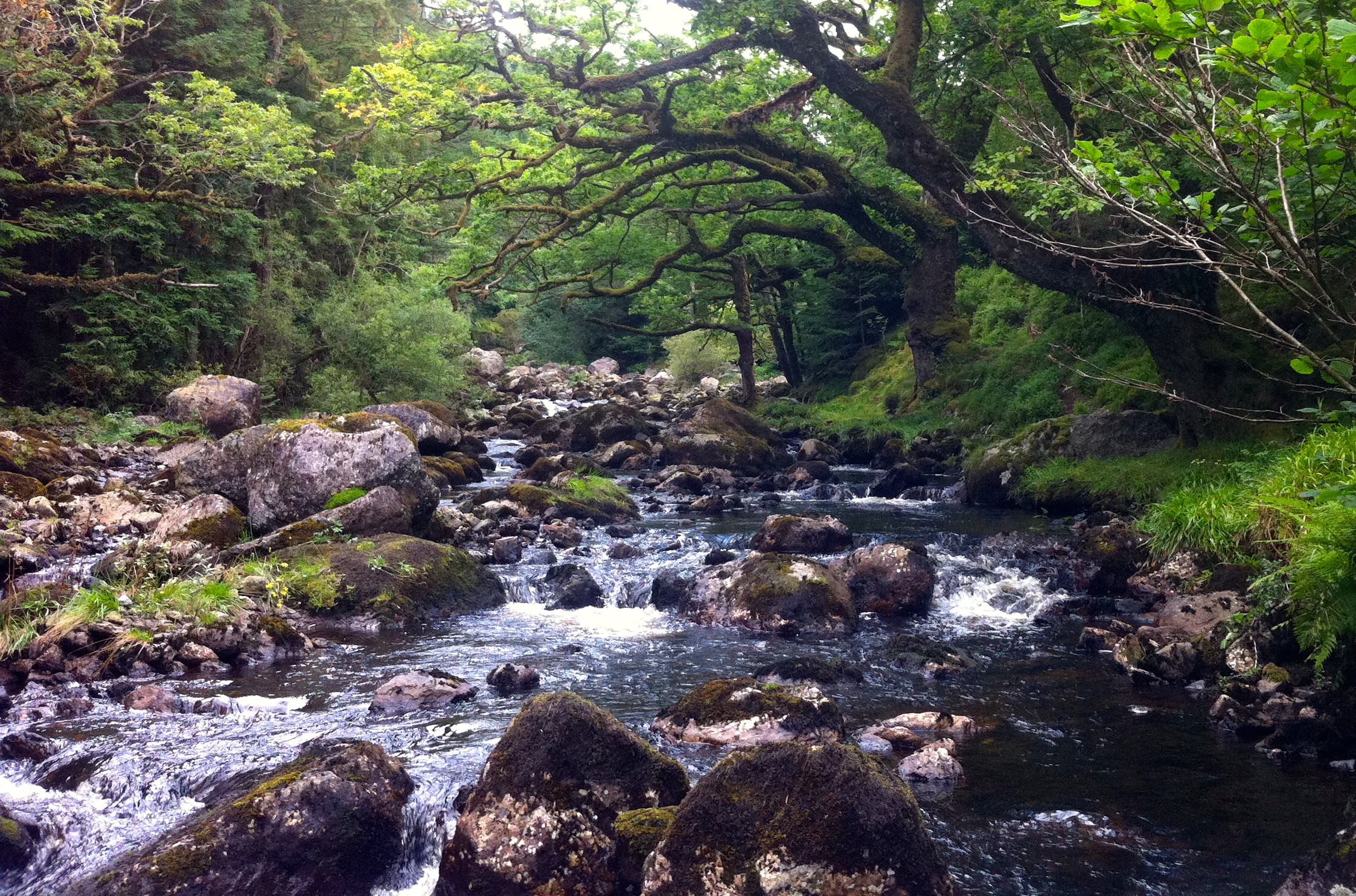
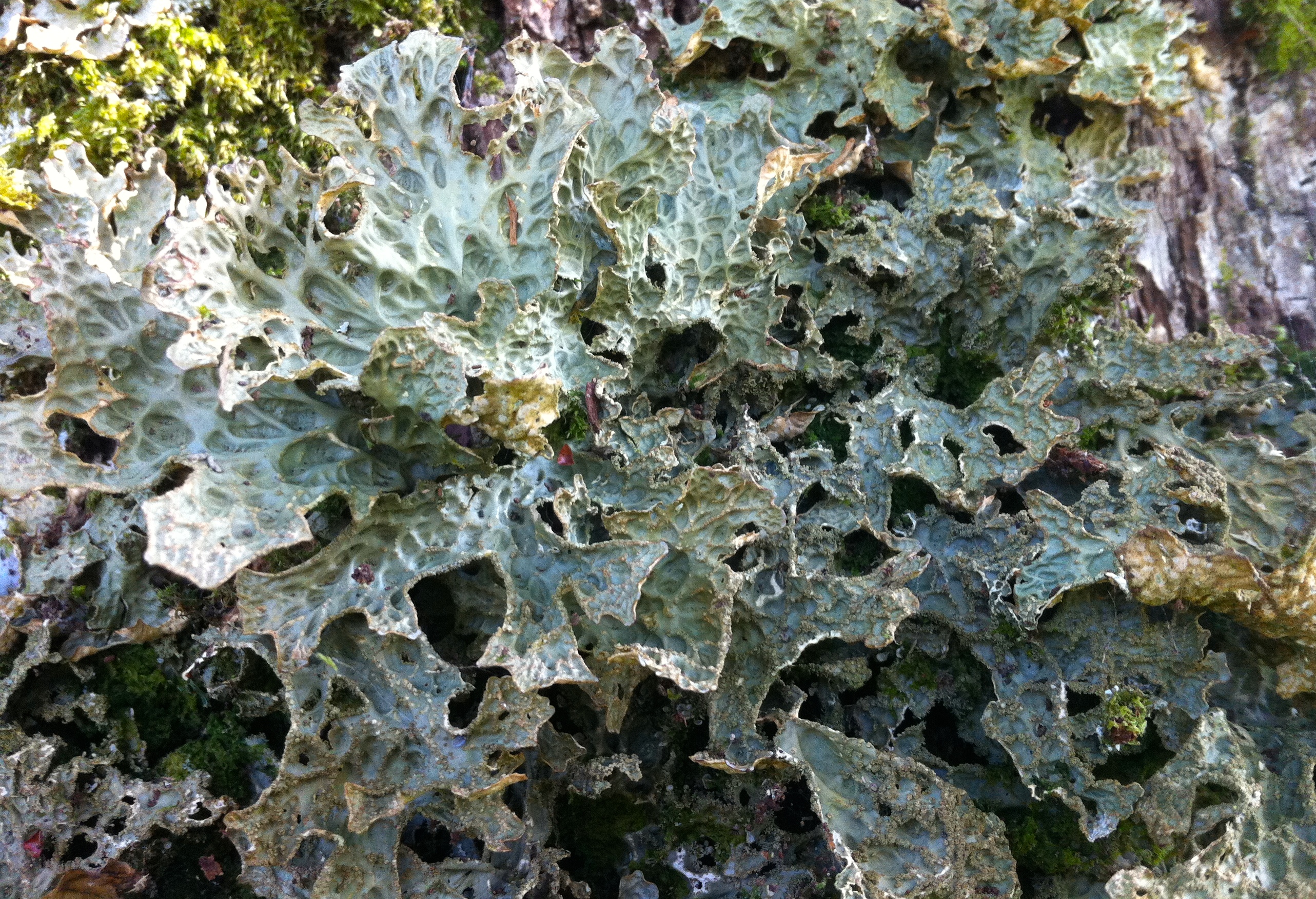
The Afon Lliw, which runs down our valley, is a typical mountain river: rocky, shallow and fast. About a mile upstream from here it cascades through a gorge littered with boulders ranging in size from a suitcase to a small car. When levels are high the water smacks against the stones, sending up a mist of spray that settles on your clothes and hair. Lining the banks are oaks, ash, hazel and behind them, walls of conifers forming a canyon of trees. These conditions combine to produce high humidity and relative shelter in this short stretch of river. For many mosses, liverworts and lichens this is very good news. The boulders are plastered with a green, brown and grey patchwork, which in close-up resembles the canopy of some exotic rainforest. Twisted bankside oaks are decorated with filigreed lichens like long-service medals. High up on one ash tree is a patch of tree lungwort: a scarce and extraordinary looking lichen – veined, membranous and parchment thin – said to resemble the lining of lungs. This is an atmospheric place that seems as though it has been unchanged for an eternity.
IMG_1029

On 3rd July 2001 3.5 inches of rain fell in 3 hours in the river catchment, and that wasn’t all of it. A wall of water gathered in the upper Lliw and hurtled down the valley gaining force as it went. It was laden with boulders, timber and gravel that sliced and blasted the riverbed and banksides – killing and maiming trees. The ash tree with the lungwort has a 6-foot high scar to prove it. Lower down, this cataract swept caravans from a field and smashed them against the bridge at Llanuwchllyn. It was a once in a hundred years kind of weather event. By the time it was over the gorge had been stripped of vegetation and completely reconfigured.

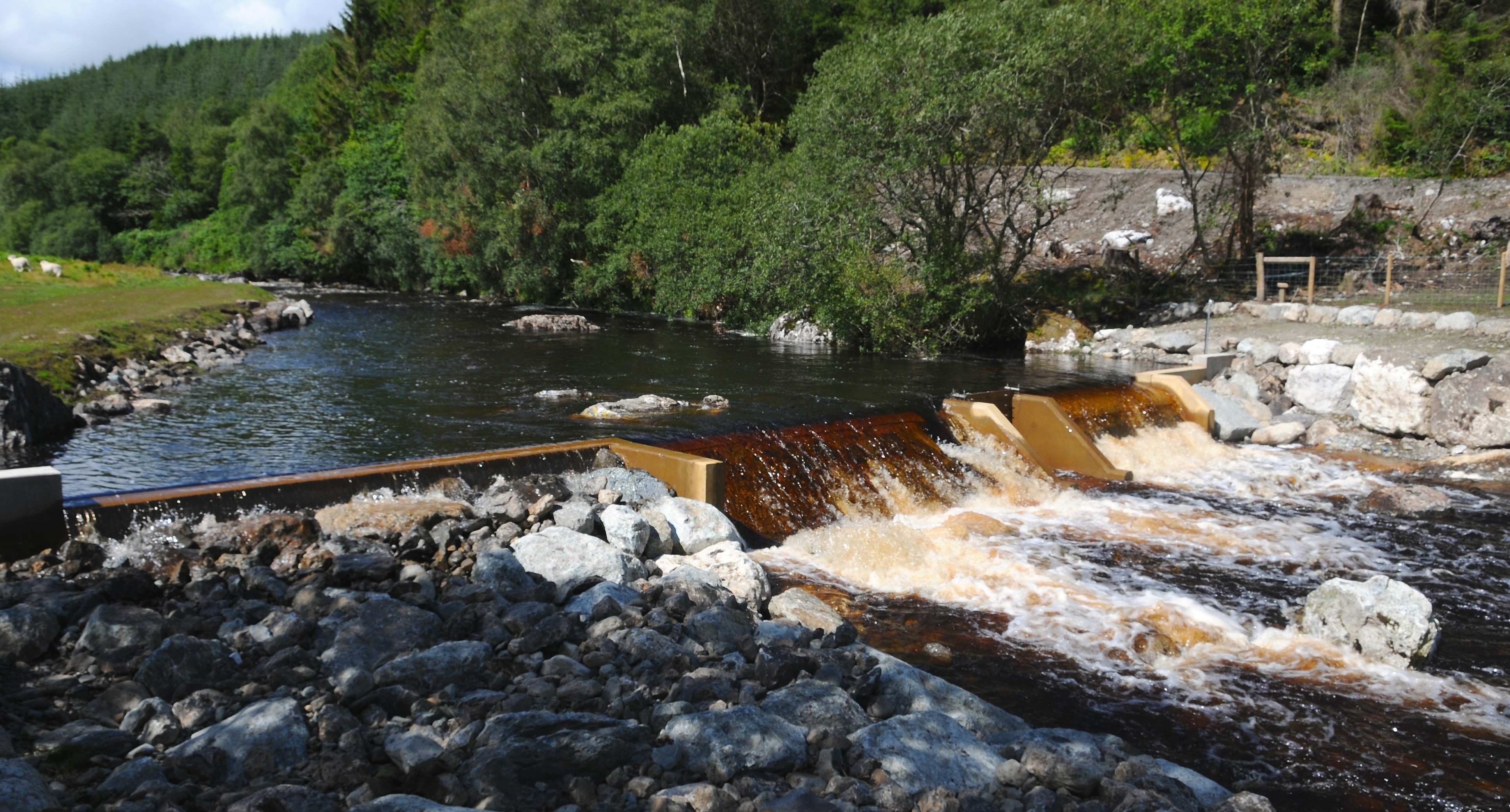
This summer a concrete weir was built across the Lliw just above the gorge. An intake pipe in the water, just upstream of the weir, has been routed underground down the hill, parallel to the gorge. Through this the river water flows with accumulating force to a pumping station at the bottom, driving turbines which generate electricity to be delivered to the national grid. The water is then returned to the river nearby. Small hydroelectric schemes like this, with financial incentives from government, are springing up across North Wales – we have steep mountain rivers. Renewable energy may yet save us, and our wildlife, from the worst consequences of climate change. This scheme is a small contribution to that.
DSC_1368

At first sight this would seem to be a conservation success story; only local disruption to the river around the weir and renewable energy generated for years to come. But there is a snag. Growing in the gorge are a number of ‘oceanic’ mosses and liverworts, so called because they are restricted to Atlantic coastal areas in Europe, especially in the damp of western Britain and Ireland. This makes them of particular conservation importance. These are mostly small plants; some are tiny, growing on rocks, trees and occasionally soil. They are fussy about where they will live, having particular requirements around such things as humidity, water levels, shelter and aspect. In truth there is still much we don’t know about the needs of individual species.

Identifying bryophytes is a specialist business; even to many naturalists they seem obscure. I wanted to understand more about those in the gorge so I asked my friend Andrew Graham if he would show me some. Scrambling over the slippery river boulders we found an intricate and fascinating matrix of blobs, tufts, lobes and filaments, many of which I found hard to distinguish from their neighbours. Andrew showed me one special liverwort growing on the stems of a moss that, even through a hand lens looked like nothing more than a blob of creamed spinach. By the end of the afternoon it became clear to Andrew that these plants were much diminished compared to 20 years ago when he and his sister had surveyed the gorge. We concluded that the flood of 2001 must have blasted many of them away.

DSC_1450

The snag with the hydroelectric scheme is that, except in times of drought, up to 40% of the river’s flow can be diverted down the intake pipe, and so missing out the gorge. Will less water and reduced humidity threaten the survival of some of the special mosses and liverworts? It might. The great flood of 2001, a seemingly natural event, probably did enormous damage to these specialised plants, but at least re-colonisation is still possible, even if it takes 100 years. Permanently reducing the water flow might be even more damaging in the long run. Then so might felling the conifer crop that forms the sheltering canyon; on the other hand they can’t have been there for longer than 50 years. There are many imponderables.

The complexity of this one small conservation problem brought it home to me just how difficult it is to anticipate the effects of our actions. Getting it right for species such as otters or kingfishers is comparatively easy. They are large, appealing and we know a great deal about them. It is a different story with these obscure and little understood plants. Also, which would have been the greater benefit: generating some renewable energy which helps reduce greenhouse gas emissions or saying no to the hydro electric scheme and so ensuring there was no harm to the plants in the gorge? It seems to me we have an obligation to minimise harm to all living things, but there is no doubt the practice of that can be very demanding.
Their Moment in the Sun

DSC_0790

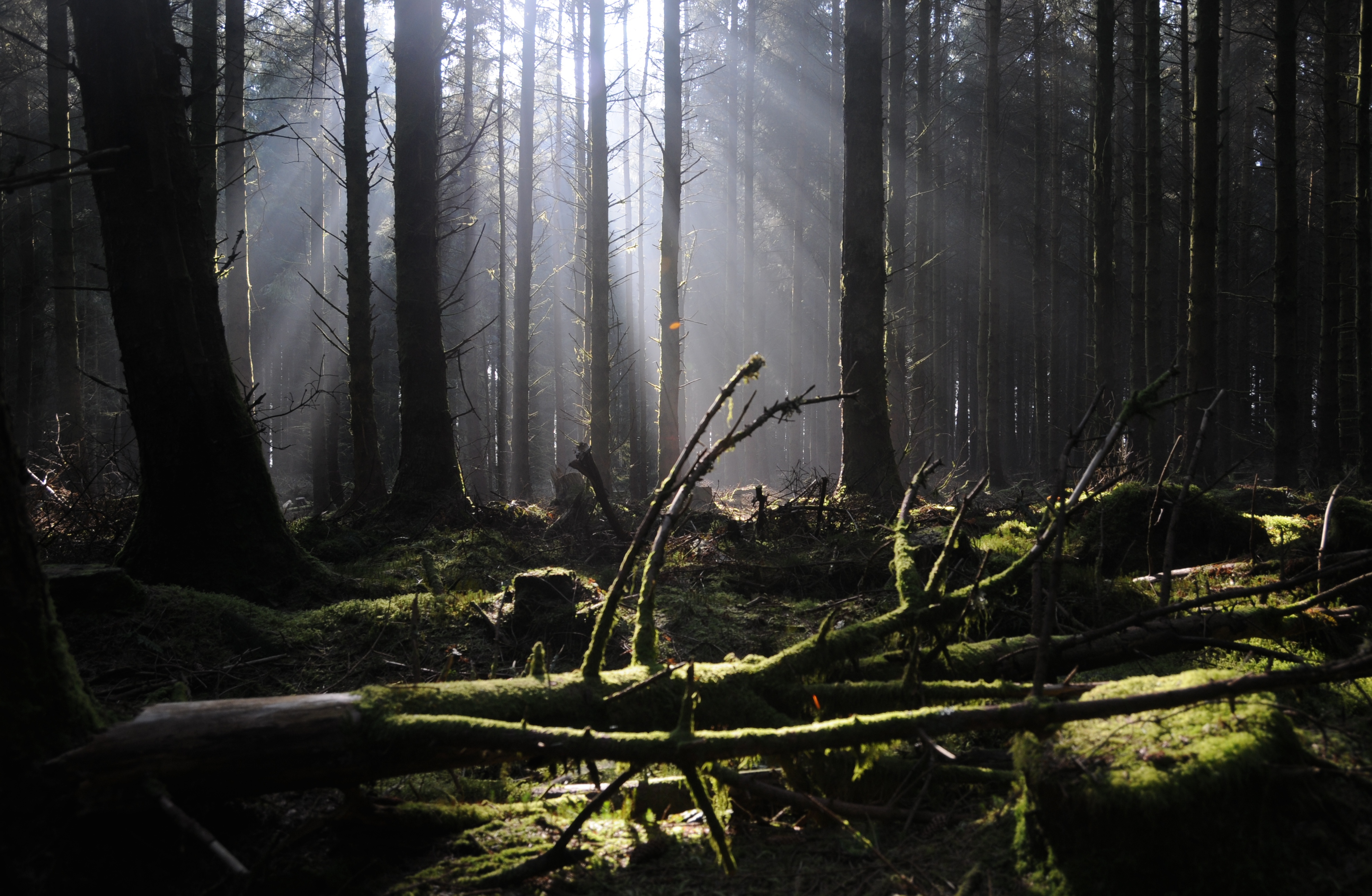
The block of forestry behind our house used to be a sombre place; forty-year-old spruce trees creaking and knocking in the lifeless gloom, their pillowing needles suffocating the forest floor save for an occasional fern. When the sunlight did find a gap it shone a light on nothing much at all. It would be hard to find a more joyless place. Only in the canopy was it ever-green, and there robins, blackbirds and the like found a home along with a few siskins and the odd crossbill.

Then one spring day, seven years ago, a man turned up with a sexy looking Finnish tree harvester and set about the place. Within three weeks he had felled the lot – by himself. It was extraordinary to watch. From his cab O.G. (as he is known locally) felled the trees with an automated chainsaw on the end of the machine’s arm; stripped the branches by flossing the trunks through mechanical teeth and cut the timber to length as slickly as slicing cucumber. He told me he had spent nine years ‘on the saws’ before learning to operate one of these voracious harvesters, which effectively replaces a gang of men. When we spoke he was tinkering with the machine, which had broken down. He could do a bit mechanically but if it was the computerisation he was stumped. I asked him what happened then. “I’ll phone Helsinki, they’ll sort it out,” he said, tapping his mobile phone.

IMG_0978

What he left behind was devastation: churned mud, broken limbs, amputated stumps, tangled brash. The place was trashed and left, like an abandoned battlefield. To my surprise I found it liberating. The landscape had been turned on its side from vertical to horizontal; I was no longer inside it but on top of it. Within days fern fronds, now flooded with light, were uncurling in brilliant green. After three weeks smashed birch trees were sprouting new growth and brambles had begun to feel their way across the turmoil. Dozens of swallows and house martins sliced back and forth in the new space liberated by the felling. A flock of a hundred meadow pipits joined them, combing through the wreckage for days on end like a search party after some gigantic crash.

DSC_1200

Fast forward to the last two or three years and the place is transformed once again. Softer and greener now as the replanted spruce begin to win the growth race against the sallow, birch and rowans. All are waist deep in a glorious tangle of bramble, brash, rushes and rotting stumps. This labyrinth of hiding places punctuated by song posts has gifted us new birds: reed buntings, tree pipits, whitethroats and the purring invisibility of grasshopper warblers. Butterflies flick back and forth and dragonflies patrol the edges. There are frogs in the ditches. Along the rough forest road the flood of warmth and light nurtures an annual burst of colour as drifts of rosebay, ragwort and thistles line the roadside like a street market from which bees, wasps and flies gather nectar and pollen. Less competitive flowers such as eyebright, fairy flax and trailing St John’s-wort have colonised the seedbed of the open gravel. Delicate pink bird’s-foot, which probably arrived here on machinery tyres from some other forest road, is gradually taking hold on this one.

DSC_0859

This is their moment in the sun. The young spruce trees are growing at a prodigious rate and the lifeless gloom is beckoning again. In 20 years from now the forest floor will be as dead as a doormat and the siskins and crossbills will be back in the canopy. But before then O.G., or somebody else, will back with an even slicker machine to knock hell out of another block of this forest, and it will all begin again as the light floods in and the whitethroats begin to eye it up.

Out of Strength Came Forth Sweetness

IMG_0969

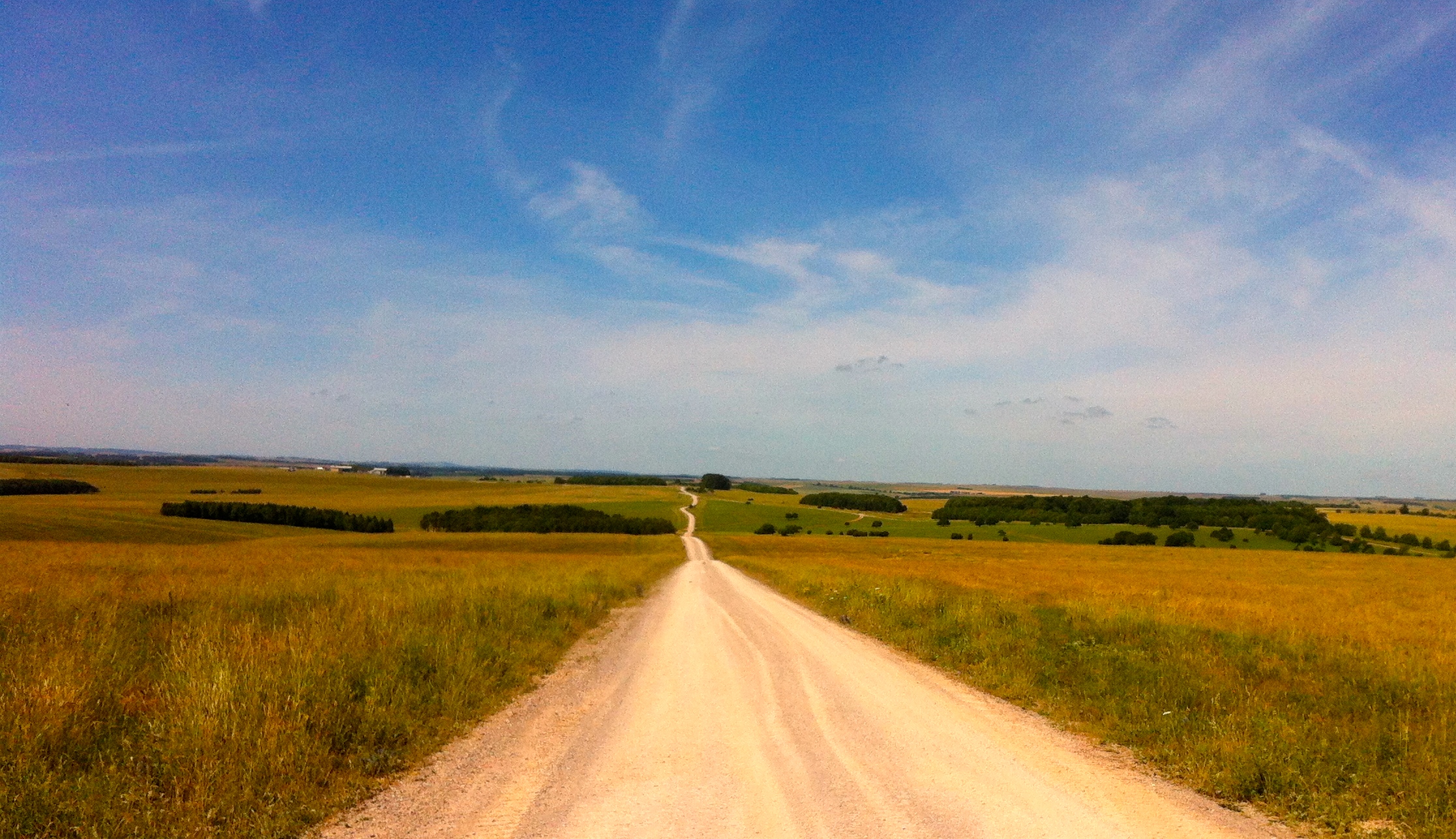
With great anticipation Elen and I drove across Tank Crossing V and out on to Salisbury Plain. I had wanted to come here for years. What stuck me immediately was the sense of space; the Plain is enormous, with rolling grasslands stretching away in every direction for miles. I could see why it has been called the ‘British steppe’. And this is not just any old grassland, it is flower and insect rich chalk grassland, the most extensive in all of northwest Europe. Elsewhere in Britain it has mostly been reduced to museum fragments in a sea of intensive agriculture.

We parked up rather carefully as apparently trainee tank drivers have been known to flatten badly parked cars. This highlights the other distinction about Salisbury Plain: that it is a 40,000 ha. military training area in very active use, with understandably restricted access – so nobody goes there much. However there are public access routes and we had been tipped off about a few. Standing by the parked car scanning the wide horizon I thought that Thomas Hardy would have recognised this landscape, at least without the scattered woodland blocks planted by the military – the better to resemble eastern Europe apparently. From a plume of dust a mile away down the dead straight road three camouflaged vehicles gradually emerged and rumbled past covering us in powdered chalk. I felt invisible, their eyes were elsewhere, we are of no consequence.

IMG_0961

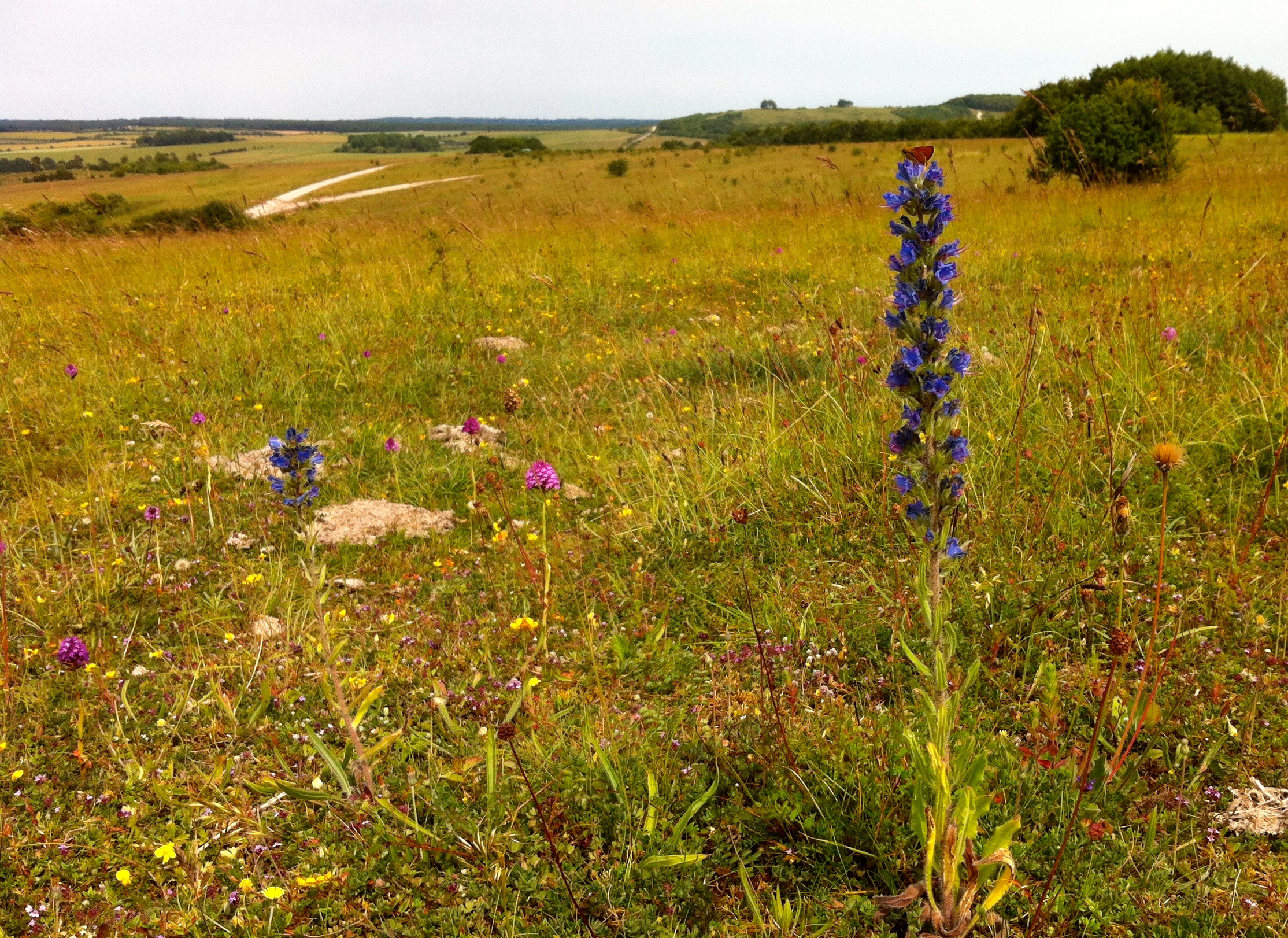
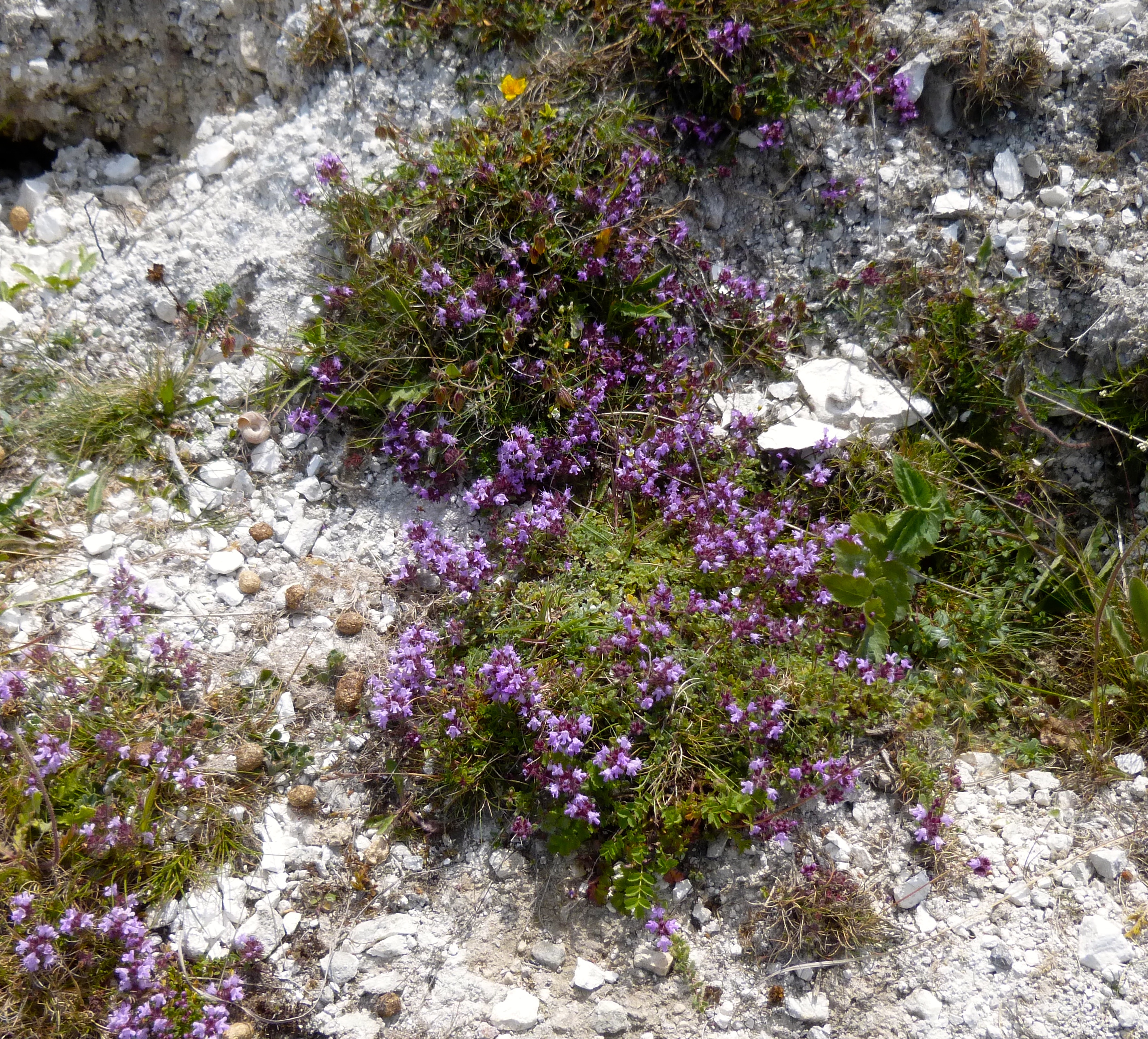
It is hot, dry and dusty, a far cry from my usual haunts in the hills of North Wales. We set off on our planned 3-4 mile circular walk, but we didn’t get very far all day. The detail in this huge landscape was so fascinating we spent much of our time on hands and knees peering into the grass. Wonderfully showy flowers such as sainfoin, musk thistle, viper’s bugloss, pyramidal orchid and the delicate froth of dropwort were everywhere. Between these were smaller, more delicate plants such as rockrose, basil thyme and fine-leaved sandwort that had colonised the ground churned up by military vehicles. The sheer variety and abundance of flowers seemed from another, gentler age.P1000880

A droning helicopter grated on us as it repeated endless search manoeuvres like a predatory dragonfly round an enormous pond. We felt watched, but it was indifferent to us. Eventually it clattered away allowing the space and peace to settle as we sat in the sun. Butterflies danced all around – chequerboard marbled whites and elegant dark green fritillaries; small blues, like smoky grey fragments of burnt paper drifting through the grass, so elusive it was sometimes hard to know if you had seen them or not. We found a single, rather battered Adonis blue, still the essence of blueness, enamelled lustrous cobalt fit to wear. Grasshoppers ticked away in the grass like a mass of freewheeling bicycles. It was blissful.

Three tanks ground round a corner rasping the ground with their skid turns, no one was visible inside. Two soldiers with painted faces drove out of a thicket in a shiny Japanese pickup. They didn’t return my wave. None of this made any difference to the myriad insects, the skylarks pouring out their song in the sky or the jingling corn bunting parachuting into the luxury of long grass. A survey in 2000 found 15,000 (fifteen thousand!) pairs of skylarks on Salisbury Plain. So it wasn’t just the variety (so often the yardstick) of wildlife so promiscuously on show here but its abundance that enchanted me. I was remembering the clouds of butterflies that were commonplace in my childhood before ‘the great thinning’. This is Michael McCarthy’s term, in his book The Moth Snowstorm, for the barely noticed attrition of half of Britain’s wildlife over the last 40-50 years. Most of this has been due to the intensification of agriculture, particularly in arable areas. The great irony is that here on Salisbury Plain, in an area dedicated to violence and destruction, nature has continued to thrive; firstly as a by-product of military indifference and more recently, to their credit, as a result of active conservation. Had the military not continued to hold this land its wonderful abundance of wild plants and animals would undoubtedly have been obliterated by the seemingly benign face of farming.

Heaven and Hell

IMG_0894I recently spent some time in the derelict slate quarries in the Nantlle valley about 10 km west of Snowdon. I have been to this haunting place before and it continues to draw me.

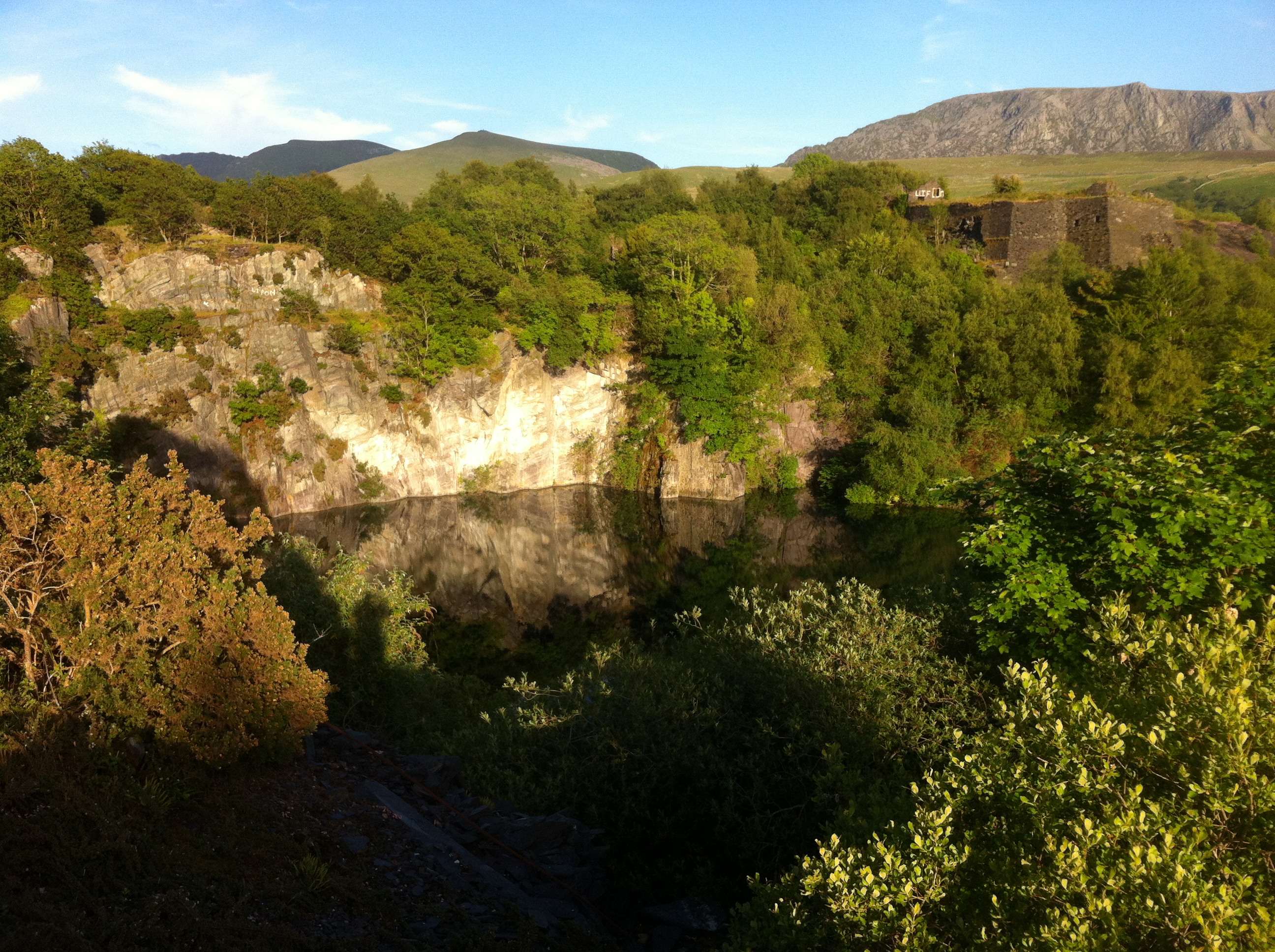
150 years ago Welsh quarries produced 99% of the world’s roofing slates, and Nantlle was one of the biggest. For a while this was a busy and prosperous place, but cheaper competition and the effect of two world wars led to a series of declines and eventual closure in 1977. What remains are huge opencast pits and mountainous piles of slate waste that seem forever poised, like suspended motion. Scattered amongst these are a fascinating and gothic array of houses, workshops, sheds, buttresses, bastions, walls and parapets – built entirely from slate. These are gradually slumping and sliding back into the ground from which they were dug, as if the rock was only briefly borrowed. As the quarrying declined nature began creeping back in and is now almost entirely in charge; stealthily covering the place with ferns, flowers, bushes and trees. By now the buildings appear like some lost Mayan city glimpsed between the foliage.

IMG_0929These quarries are a strange no-man’s/every-man’s land, feral and self-willed; virtually unfenced and (mercifully) free of safety notices despite the precipices and rockslides. They are littered with bits of bonfires, old paint cans and relict cars. Around the back of a ruined house I found two garden plots fenced with pallets and old bedsprings, each contained neatly tended rows of potatoes.

In the middle of all this is a quarry called Dorothea: a colossal, straight-sided pit, a brutal scoop from the earth like a gouged eye-socket, now filled with deep black water. This water is 100 meters deep, and it is the depth that is so beloved of scuba divers. So beloved in fact that between 1994 and 2004 alone 21 of them died here. Whilst peering into these ominous waters I met a man who used to dive in Dorothea. He said “I can’t do it any more, I am too fat” but he was matter of fact about the deaths “They know the risks, they push it, we all did. It’s the depth and the cold that gets them.”

IMG_0899Wanting to get away from the chill of Dorothea I scrambled up between the oaks, ash and sycamore growing on the slate piles, delighting in the way nature was re-clothing the scarred body of this place. A creeping cotoneaster was grabbing ground hand over fist, dozens of insects drawn to its sweet flowers. A green woodpecker called hysterically across the treetops and a willow warbler sang down the scale – a little half-heartedly by now. I feasted on wild strawberries, hanging like exotic earrings and ripe all the way round. There were casual gardens of wild flowers – stonecrop, birdsfoot trefoil, thyme, herb robert and clover – sprawling across the slate waste, grafting on a new skin ahead of the shrubs and trees that will surely follow.

IMG_0914This odd ‘please yourself ‘ sort of a place can seem sinister and even dangerous and yet beautiful and benign too. Nobody seems to care what you think of it or how you use it and there probably isn’t enough money or the will to ‘do anything about it’. Meanwhile the trees steal forward.

Shelter from the storm

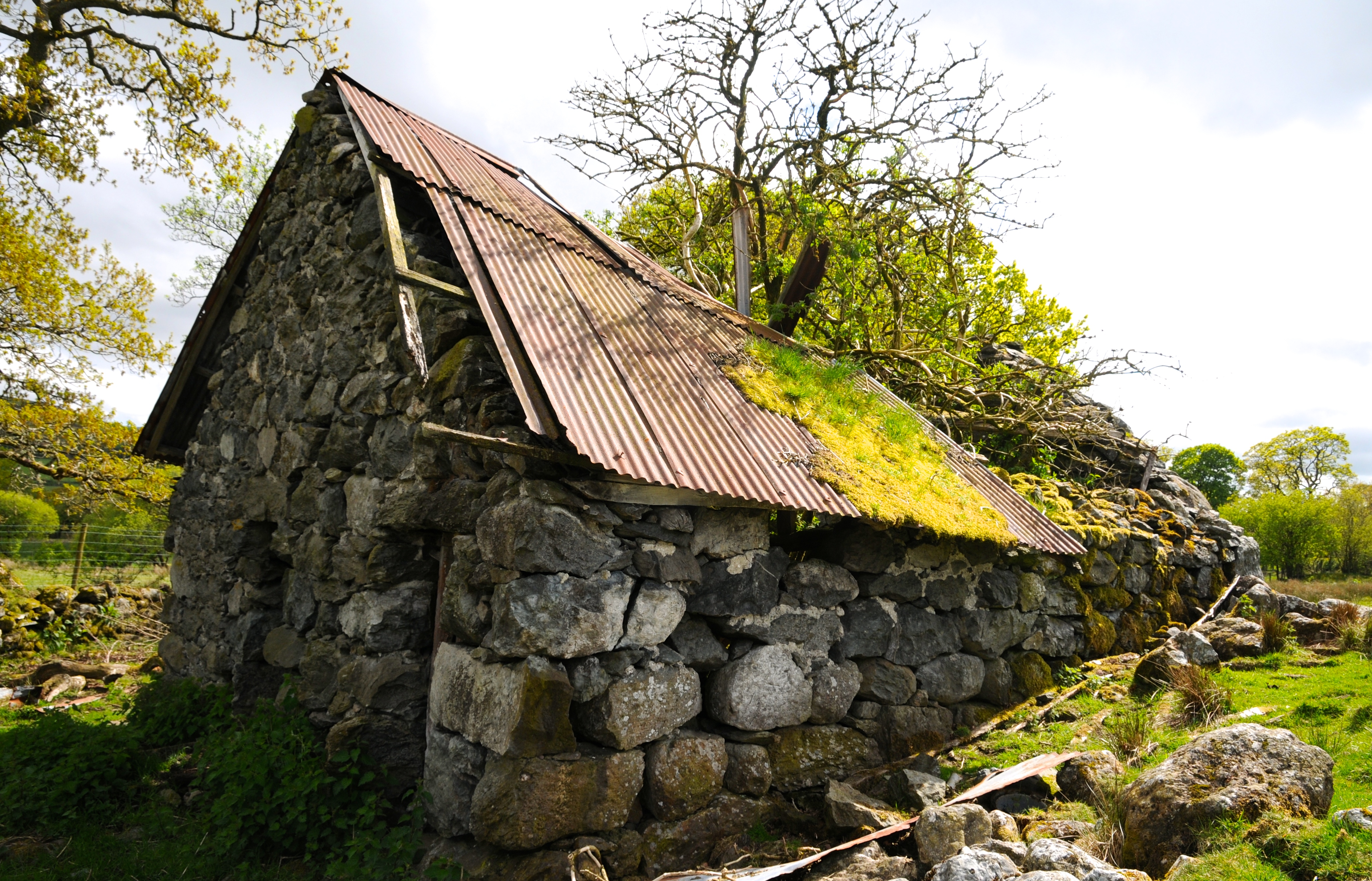
DSC_1311Thunder was rolling around the valley and large raindrops began pattering down ahead of some ominously dark clouds bearing down from the mountain. I cut across the field towards a small derelict barn that might offer some shelter. More than half its roof had gone, jagged corrugated iron ripped away by decades of clattering wind.

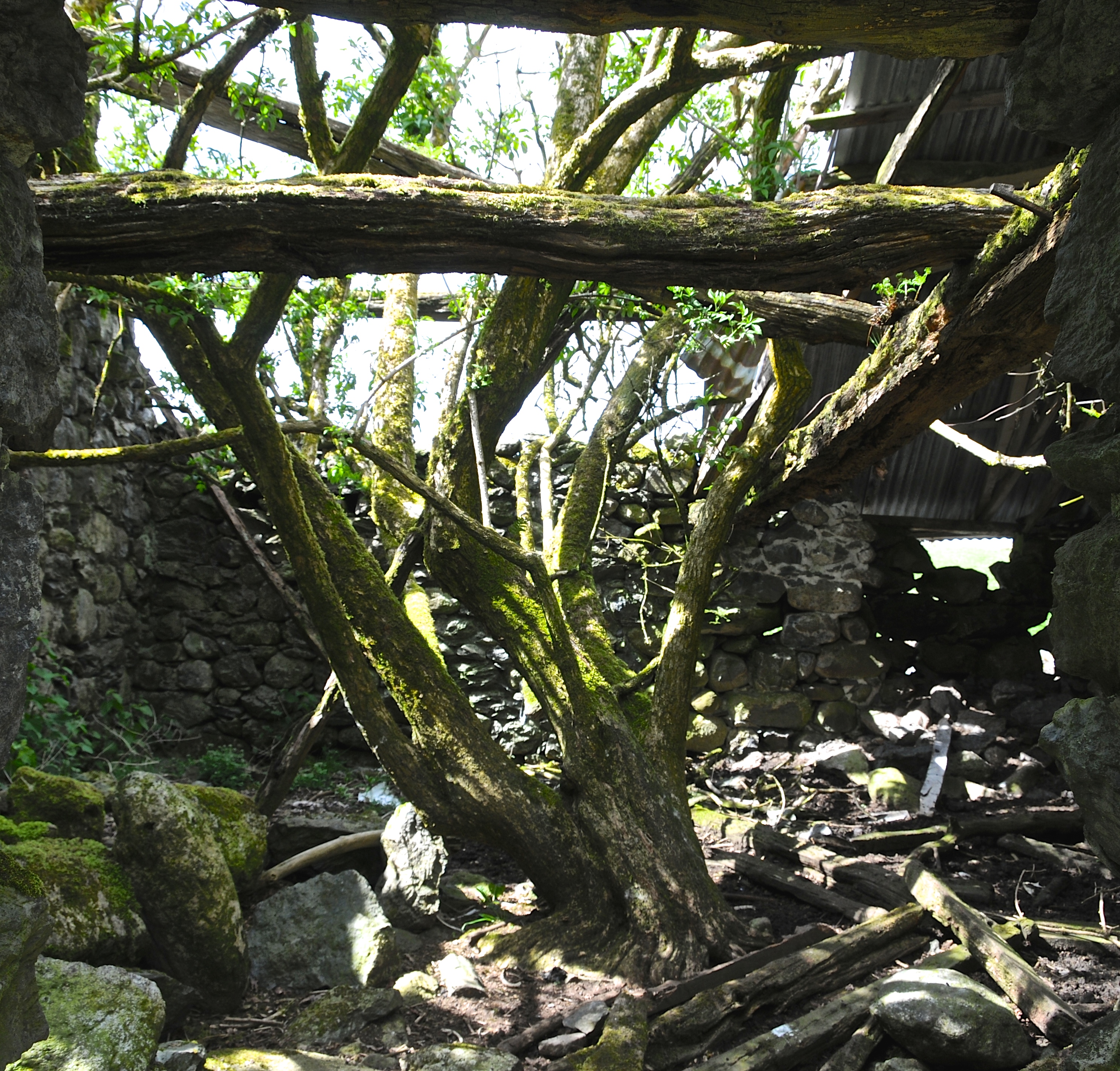
At the near end the roof was intact so the floor drier, especially in the corners where stones from the collapsing walls were piled up. The place was a midden; stinking of sheep shit piled up like guano on the fallen stones. At the further end was a near complete sheep skeleton, its spine arched back as if in pain. The floor was strewn with fallen beams, sodden and rotting in the mud and dung. Despite having much of its roof missing it was a claustrophobic place, made so by a huge elder tree that crammed the space and had burst out where the roof should have been, its canopy a triumphant umbrella over the gap. I had rarely seen an elder so big. It had no doubt fed well for fifty years or more on all that nitrogen rich dung and urine from sheltering sheep. Otherwise all it needed was the hole in the roof to get started and nobody to give a damn about this building to keep going.

DSC_1305

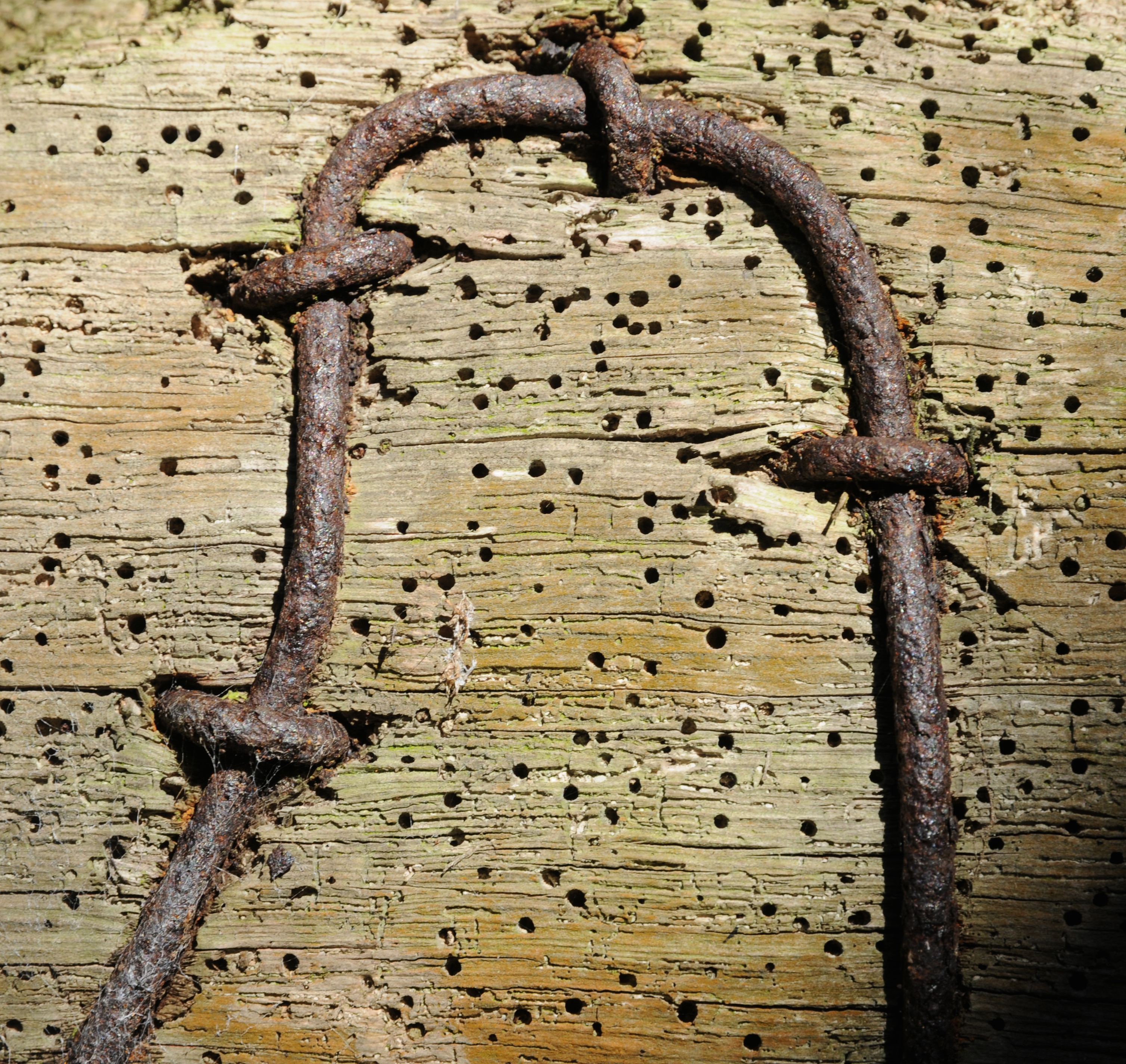
With the rain drumming on the corrugated iron I began to look around, squelching through now liquefying mud. This building was well put together. There was no sign of the original roofing slates, presumably reused on another building, but the eight-foot high stone walls had been skilfully built and some of those stones must have been a heck of a weight to handle. The joints had been carefully mortared on the inside. At the dry end there was a well made wooden door, now forever closed by fallen masonry, which had two satisfyingly neat wooden lift-latches. The sodden oak trusses had individually cut sockets for the fallen beams. A short length of hand-forged chain with beautiful twisted links lay half buried in the mud. I couldn’t resist pocketing it.

DSC_0350 Standing there in mud and gloom I began to feel sad and a bit disgusted, tainted by a familiar melancholy about ‘falling-down Wales’. It was tempting to imagine this barn was built in happier times – but they probably weren’t. And nobody was to blame for its neglect despite my urge to look for a guilty party. It was a utilitarian building whose time had passed. I wondered why I wanted the building to survive; it was clearly no longer useful to modern farming. There are thousands of beautifully made derelict barns in Wales. What was appealing was the care taken in the craft and construction of this ordinary building, built to house animals or store hay. Nowadays it’s the sort of work reserved for artisan guilds or specialist craftsmen; then it was the only way they knew. Somehow the unavoidably slow, careful making by local hands connected me to then. It had a sense of human continuity and scale that felt right. For all its elegance of design, precision of construction and complexity of function I cannot feel that about an iPhone.

Skullduggery

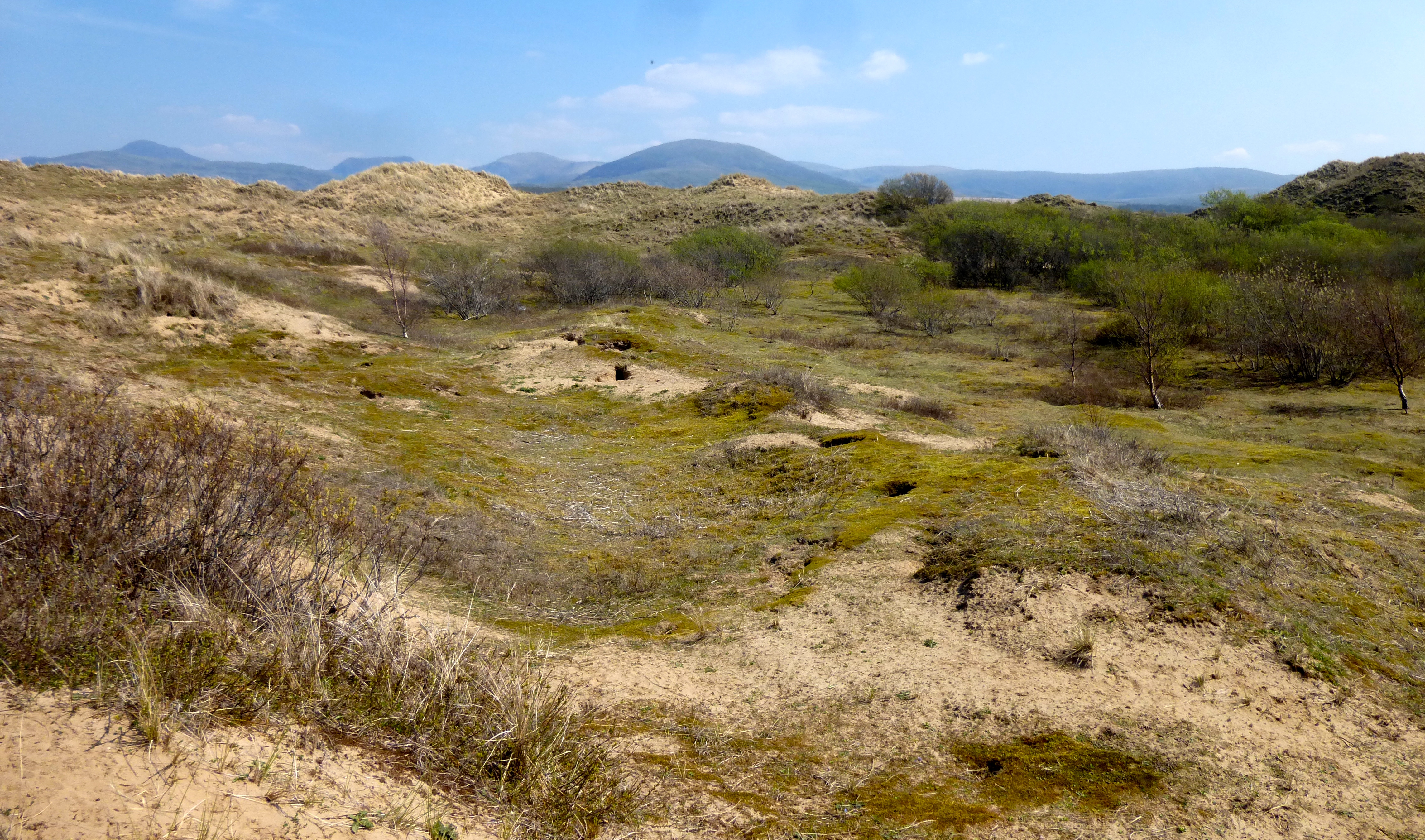
P1000809Recently I went with a group of local naturalists to visit a sand dune system on the coast not far from here. We had to get there via a tourist facility which described itself as ‘the biggest campsite in Europe’. It is always rather weird tramping through such places in boots and anoraks festooned with binoculars and cameras, particularly as in this case there was an adjacent nudist beach.

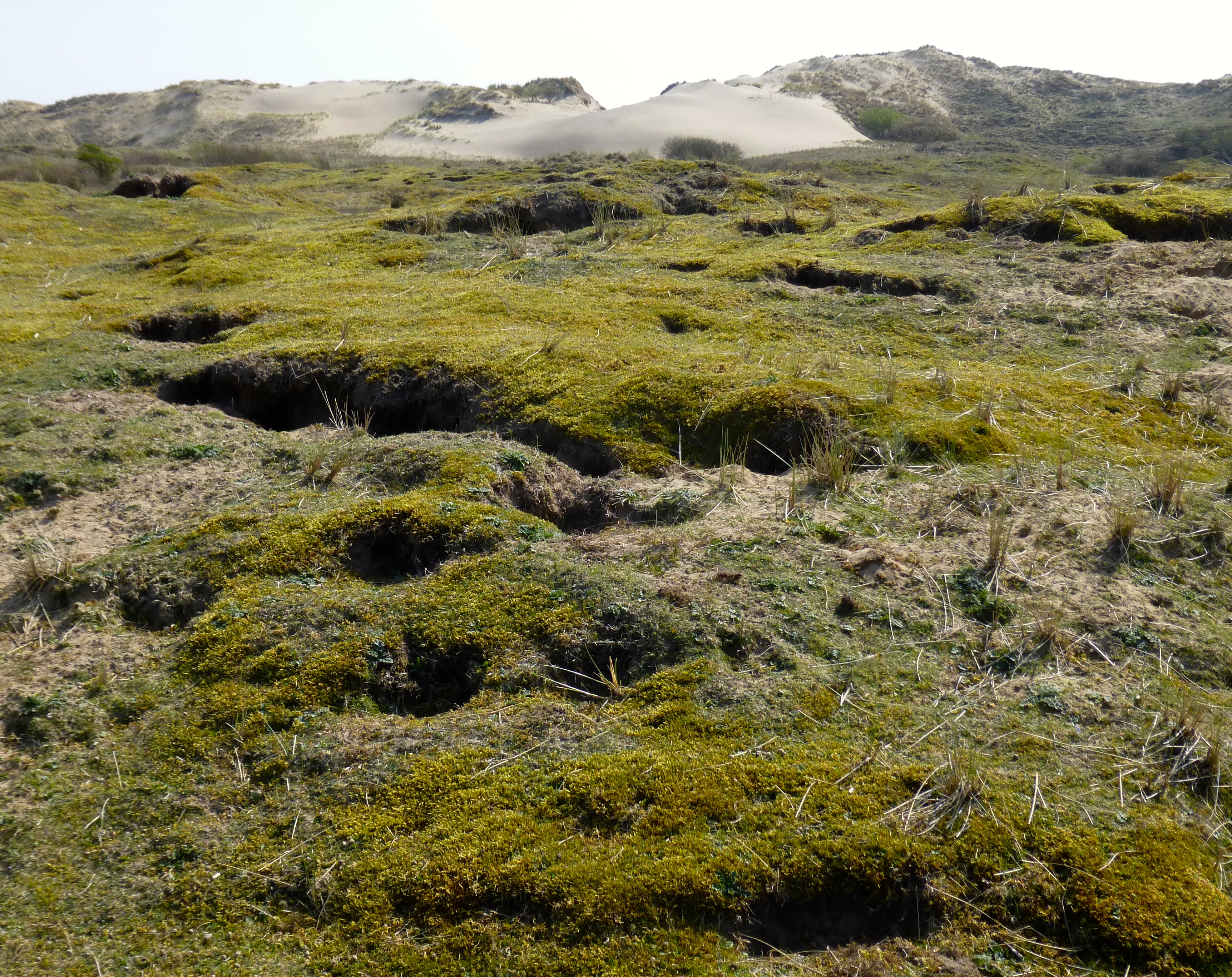
Big dune systems such as this have a characteristically arid ‘moonscape’ quality, especially from autumn through to spring when muted greens and yellows wash over ridges of blown sand, flat-line slacks and rolling ‘fixed’ dunes held together by grasses and mosses. Dotted amongst these were clumps of sallow bushes each with a singing willow warbler. Particularly P1000817striking in these dunes were the many thousands of rabbit burrows and scrapes. Although I didn’t see more than three or four rabbits all day I can only presume that at night they are grazing practically elbow to elbow. Currently the population is obviously booming but I was told that periodically epidemics of myxomatosis have all but wiped them out, leaving the place littered with bones like an ancient battlefield.

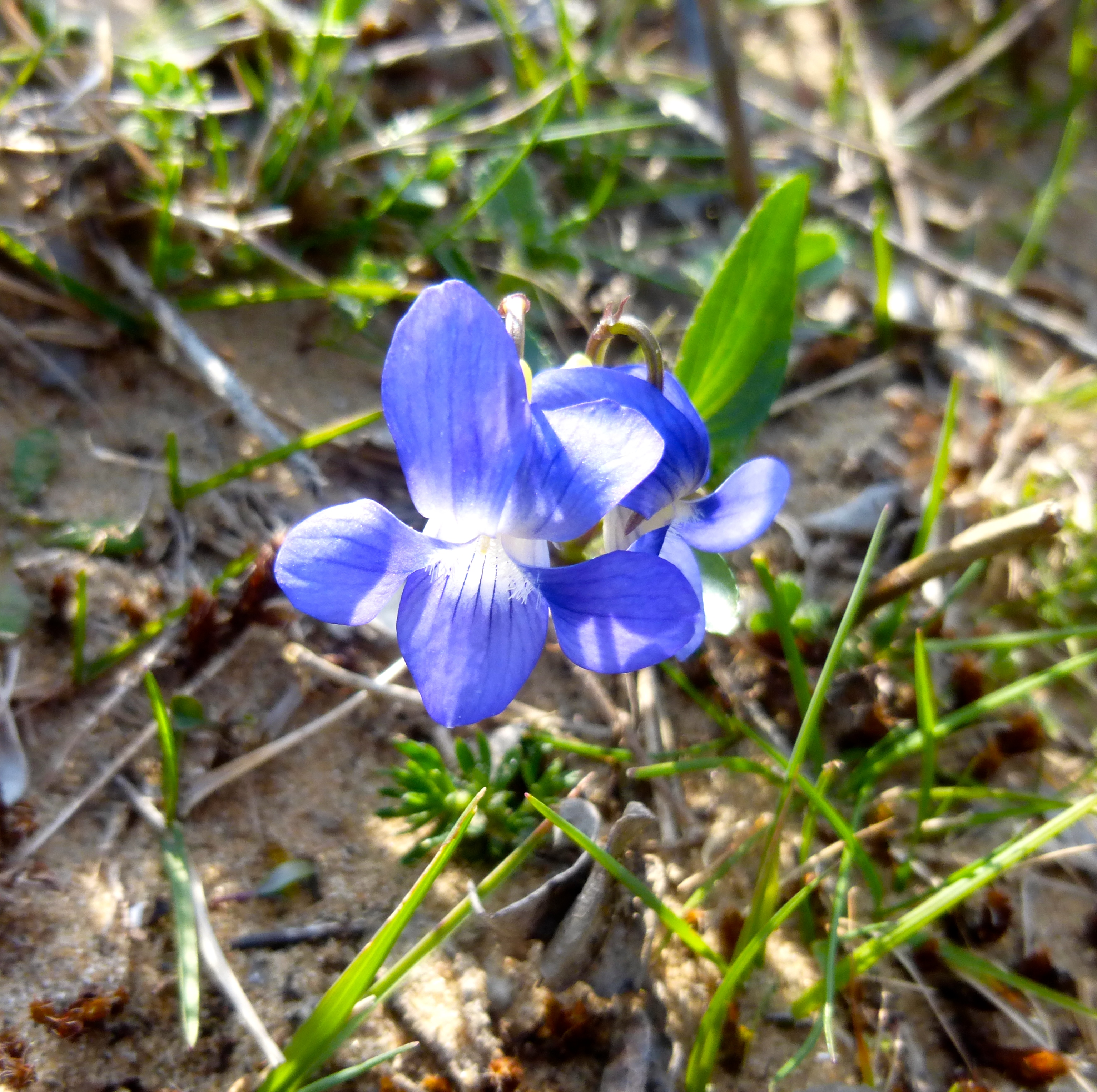
There wasn’t much flowering in this chilly, late spring except the tiny yellow beacons on the carpets of creeping willow and huP1000823ndreds of pale blue heath dog violets scattered over the grassland like discarded fragments of pottery. In a flat bare dune slack one of our party showed us petalwort, a rare and highly protected liverwort (liverworts are related to mosses). This plant was so small that I could only just see it through a x10 hand lens; it looked for all the world like a miniature cos lettuce. A more striking sight was probably us with our heads pressed to the ground and bums in the air; which was no doubt recorded by the endlessly circling drone from the adjacent airfield. Perhaps we are now on somebody’s database as potential jihaddis.

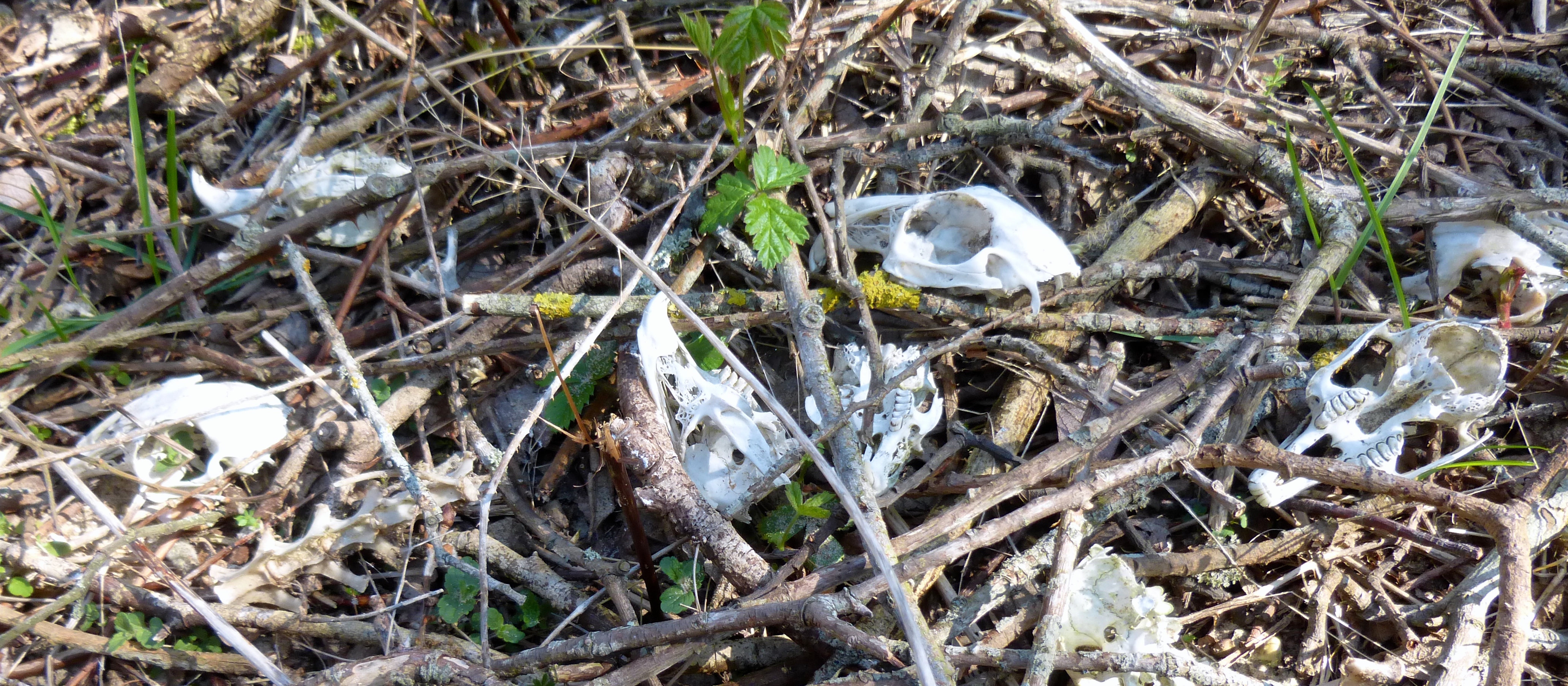
P1000813The most intriguing part of the day for me was something altogether different. We were exploring a patch of tall scrub when I spotted a crow’s nest about fifteen feet up in a flimsy sallow. On the ground underneath it were approximately thirty five bleached white rabbit skulls. There were few other bones – just skulls. Through binoculars we could see more skulls incorporated into the fabric of the nest. Out on these lonely dunes it was a bit spooky, as if  some macabre ritual had been taking place. It was also a puzzle: if these were old prey remains how did the crows get them there as, unlike birds of prey, they cannot grasp with their feet. Also where were the bones from the rest of the carcasses?  Surely they cannot have been feeding only on heads. Having mulled it over for a while my best guess so far is that the skulls were from rabbit skeletons scattered across the dunes after the last myxomatosis outbreak, cleaned and bleached by the weather. I am supposing that this pair of crows had a taste for decorating their nest, as many of the crow family do, and had taken a fancy to rabbit skulls. No doubt it was difficult to secure the skulls into the fabric of the nest so they probably dropped many more than they incorporated — and there they lie underneath the tree.

Whether this is the right explanation or not it does highlight the importance of rabbits to the ecology of this dune system. They graze the grassland short, consequently less competitive plants are not squeezed out by taller vegetation; their digging and scraping provide countless patches of bare ground which are colonised and utilised by a variety of plants and invertebrates, and the rabbits themselves are an important source of food for birds and mammals. Whether you are a crow, stoat, lizard or violet gratitude for rabbits seems to me to be in order.

Exit Stage Right

P1000752

I had parked up on the side of a single track road and was sitting on the verge gazing out over miles of bog and heather to the mountains beyond. Everything was shades of brown, from tawny through to chocolate, save the blue of the sky and its intense reflection in the stream winding across the moorland. The breeze ruffled the rushes and a skylark towered up, pouring out its self-sustaining optimism, as if the song itself was dragging it heavenwards. A little while later two red kites flew languidly from left to right across my view and then disappeared. That was about it; mostly nothing moved.

I was about to go when I saw something catching the light about half a mile away, drifting low over the ground it was coming closer, and there it was: a black-tipped, ghost-grey hen harrier, twisting, fanning, dipping, always closely attentive to the ground it was covering; carefully minding its business – a reclusive, preoccupied moorland aristocrat. It gradually and meticulously worked its way down the valley, until it too exited stage right, leaving me contemplating 360 degrees of wild open space with nobody in it. Space to think, breathe, walk, look or just sit and be; it doesn’t matter. It seems wonderful in our crowded islands to have so much open country, inhabited by wild creatures and plants, just there – freely available to the curious.

However, wild landscapes such as these have been used and abused by humankind for 5000 years or more so they are much changed from their original state. Even now they are variously sheep grazed, drained, burned, cut, shot over, planted with conifers and polluted from the air. All of these activities are to a large degree restrained or encouraged by legislation, regulation, government policy and public money – which brings us to politics.DSC_1154

When I got home I sifted through the election leaflets posted out by the parties contesting this constituency and was frustrated and saddened to see that nature and the environment barely got a mention, and that is in the Snowdonia National Park! It is as if we, politicians and electorate alike, take for granted our beautiful countryside, seeing it as an unchanged and unchanging backdrop to our lives that needs little or no attention. Yet it is estimated that 60% of British wildlife species are in decline, so unless we pay careful attention to how such places are managed and used we may end up with an empty stage on which we can reminisce with our grandchildren that ‘there used to be skylarks here and even hen harriers’.

Against All Expectations

DSC_1121

‘It seems like a desert’ was an odd thought to have about a wood in North Wales, especially one on the slopes of a gorge full of hurtling water.

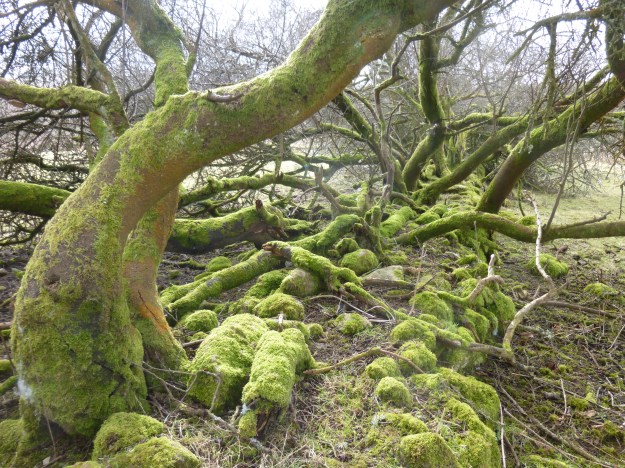
I had come here to get out of the biting north-west wind which had been blowing for a week or more and in the expectation that, here at least, there would be the first signs of spring. Instead these woods are blank, bare and introverted. They seemed dessicated rather than lush, despite their mossiness. The trees are bare sticks pegging down a spread of yellow-green moss; an underlay waiting for the carpet – which will never come in this part of the wood, if the sheep have their way. As well as bare the place seems curiously still despite the remorseless torrent of water flickering and hissing through the gorge, thinning and screening all other sounds. Under the hissing is a steady roar; I realise I am expecting it to pass like the sound of a train – but it is permanent. A DSC_1117dipper is stock still on a rock in the middle of the torrent: black and white, portly, like an old-fashioned station-master waiting for that train. Further on there are swathes of fresh wild garlic leaves flanking the river but they are a dull green (perhaps it’s the light), odourless and blind- before -flowering. I have no sense of energy held back waiting to burst; Dylan Thomas’ ‘green fuse’ of spring.
Then rounding a bend in the path there against all my expectations is a clump of brilliant white wood anemones, starry faces turned to the light. Amongst the dull moss and fallen wood they seems as vulnerable as a huddle of children abandoned by the roadside; so out of keeping with the mood of the day they might have fallen from the sky freshly made. Yet for all their apparent youthfulness and fragility I know they are ancient and persistent. The seeds of wood anemones are rarely fertile, in Britain at least, so the plant(s) spreads with glacial slowness by extenuating its root system year by year, each flower being an expression of the whole matrix, which may be hundreds of years old. A patch of wood anemones can be viewed as a single plant which may be as old as those ancient oaks we venerate. These very wood anemones (or should that be singular) at my feet may have been flowering here when Shakespeare was writing A Midsummer Night’s Dream.

DSC_1108    In the face of this quietly inching forward over centuries my grumpy expectations of ‘spring when I want it’ seem ridiculous. I realise, once again, that there is no need to want anything but rather just be grateful for whatever is on offer in the quiet-nearby.

Down to the Bare Bones

DSC_1063

The farm where I live is irregularly divided into about a dozen small fields separated by hedges; these were probably planted 2-300 years ago when the rough land was first cultivated. Each was planted on a bank built from tens of thousands of boulders and stones picked out by hand from the newly ploughed land. That’s a lot of sweat and aching backs, no doubt over many years. The hedge banks were then earthed up and saplings planted on top which, once grown and then laid, would form a stock proof barrier. These hedges have probably been cut and laid many times since which rejuvenated them, allowing the original shrubs to live on for centuries. For some reason, perhaps it was just what the nursery had to hand at the time, blackthorn is dominant in long sections here at Cefn Prys.

P1000725

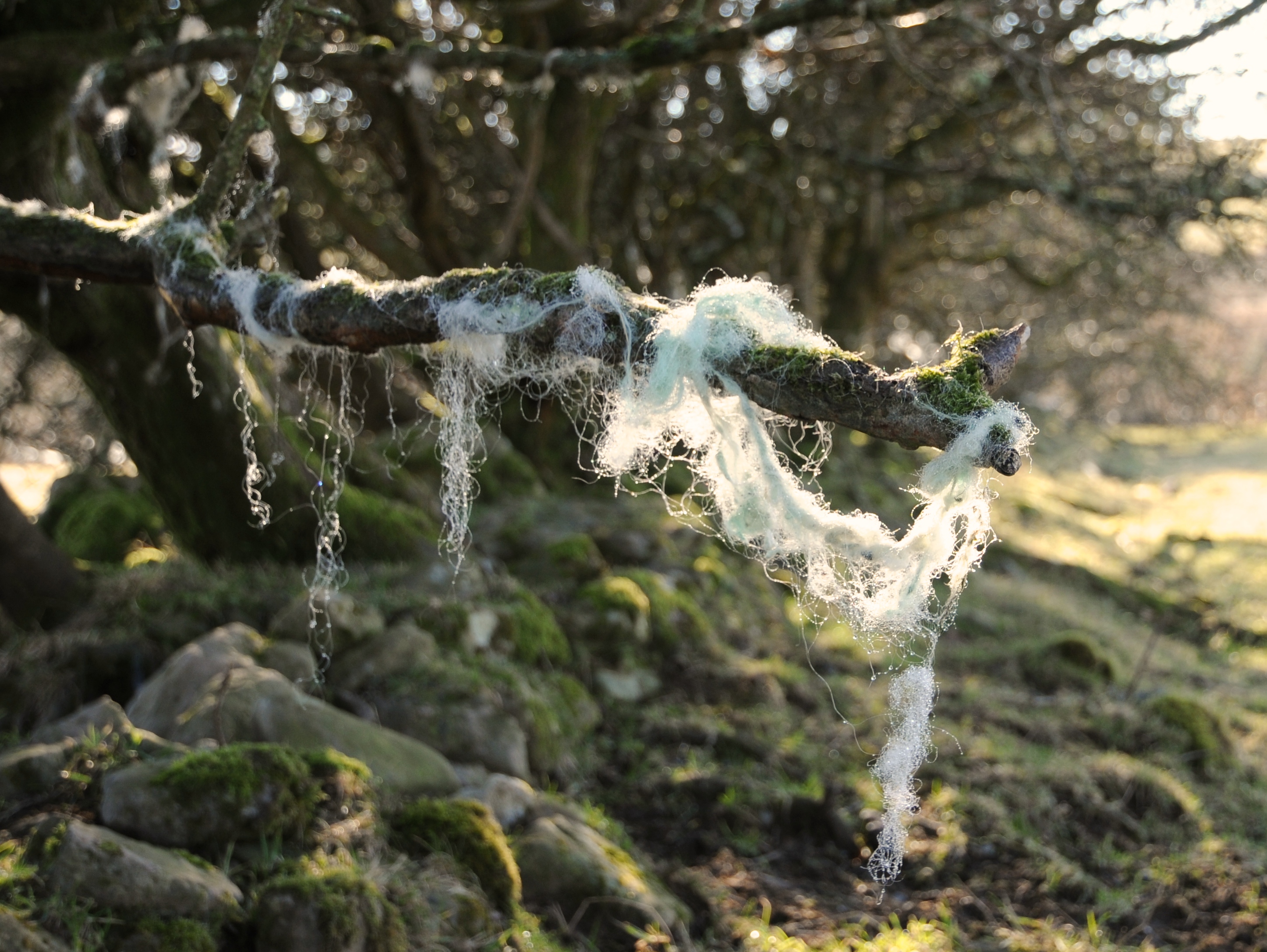
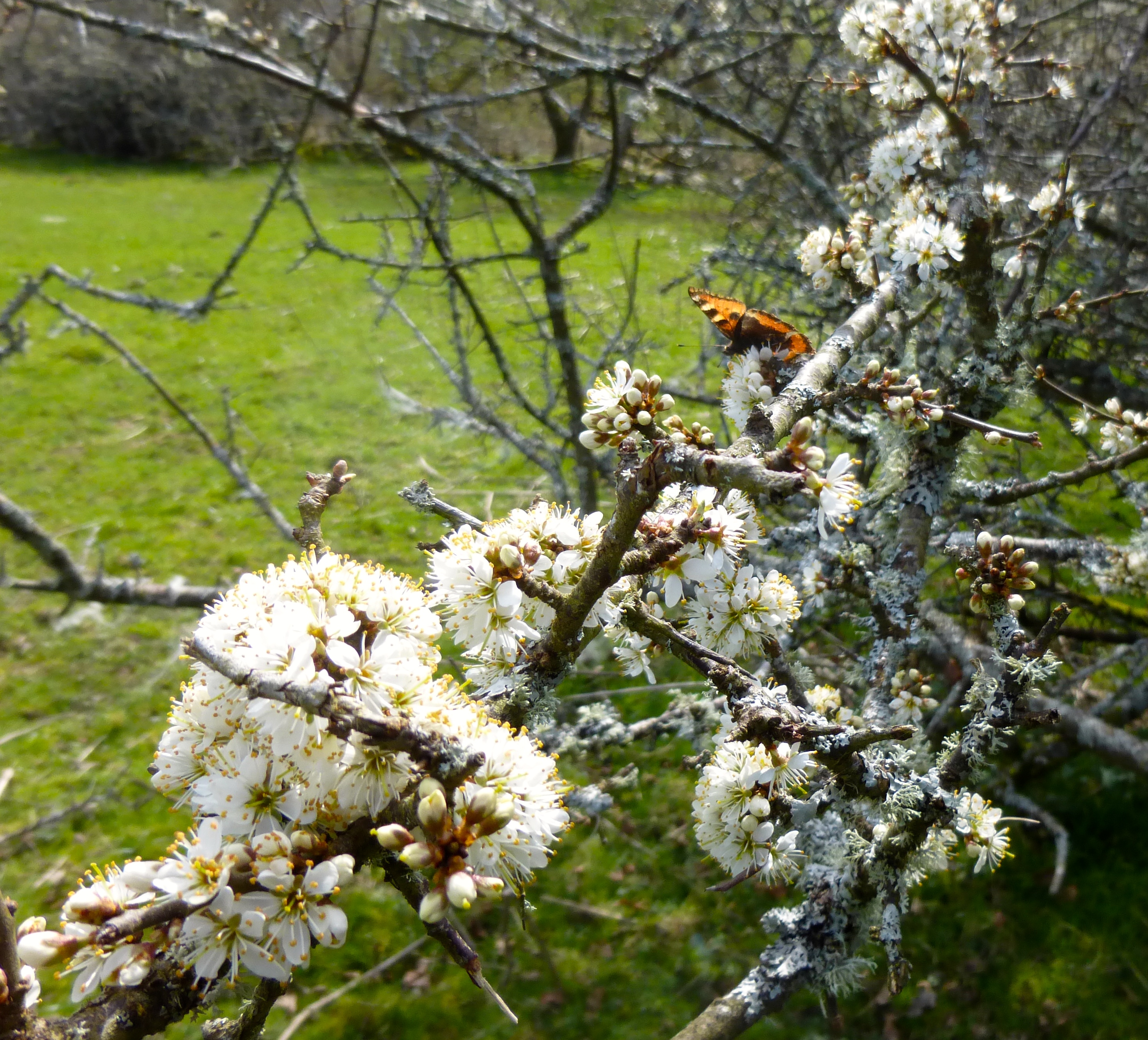
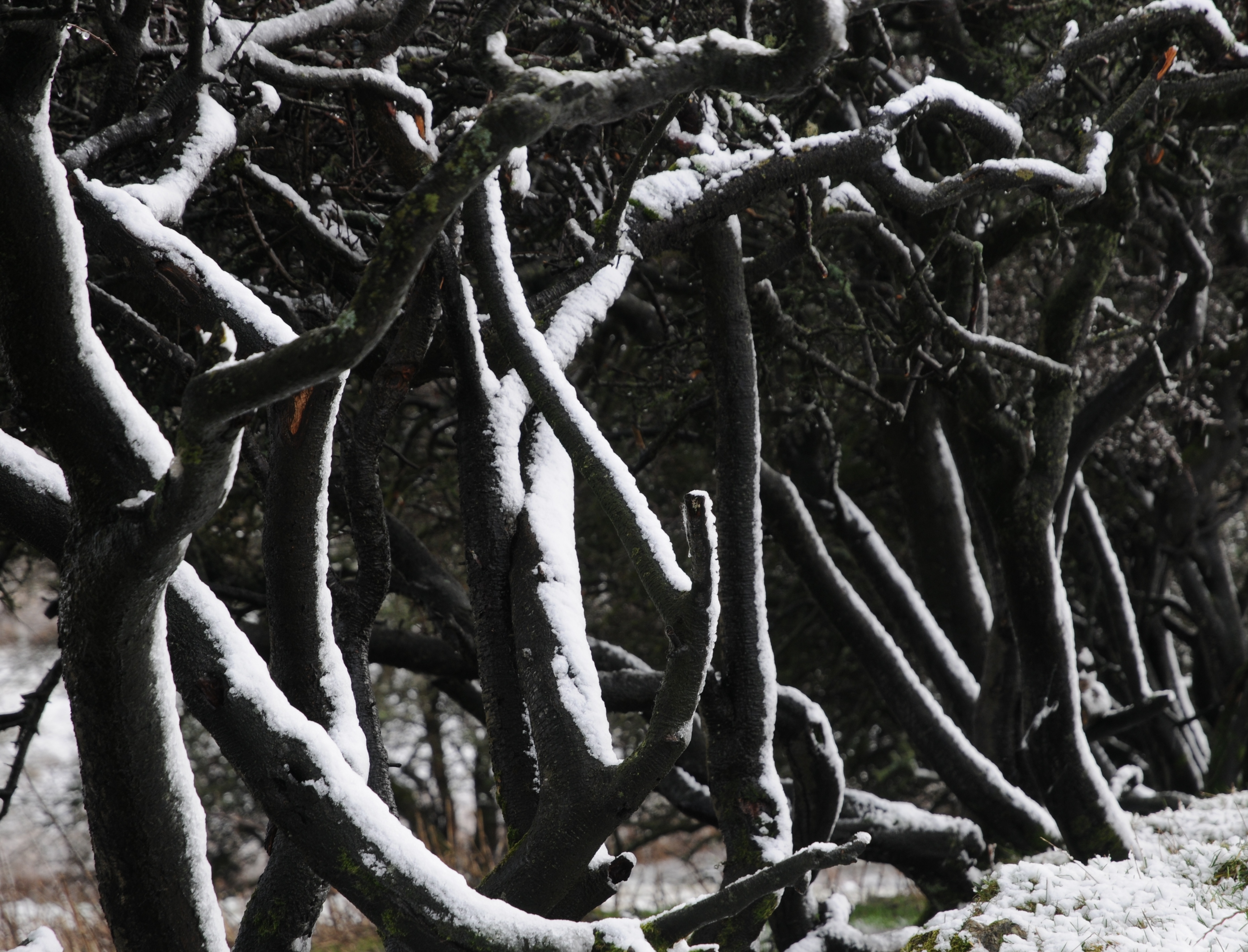
But times have changed. In the last 50 years there has been no need for hedges to keep sheep and cattle where you want them – post and wire netting fences do that job now. More recently my neighbour is using an open-plan grazing system so he needs fewer divisions between fields. About 15 years ago some of the hedges were laid and fenced out as part of an agri-environment scheme, and they are once again rejuvenated. The rest, mostly blackthorn, are gradually falling down. They have grown old and straggly with twisted stems polished with lanolin where the sheep rub, halos of wool snagging on the lower branches. Some are split and fractured with tops snapped out and others have collapsed to their knees or even bellied out on the turf. Of those still standing the thorny tops have a grey stubble of lichen and shanks green with moss. There are gaps now like missing teeth where the sheep come and go as they please, wearing the stone banks to nothing.DSC_1094

Yet come April these arthritic ancients will turn their faces to the sun once more and open out into billows of delicate white blossom like lines of elderly brides. For a brief time you can see them from miles way. If it is warm and dry hover-flies, bees and butterflies will pollinate them and there will be a good crop of sloes; perhaps enough to attract a hawfinch or two and certainly sufficient for us to make sloe gin.

So I celebrate and mourn these ancient hedges clinging stubbornly to life, telling stories of land-use, age and weather. They are full of presence and character because they are in the last stages of life – their rejuvenated neighbours look like nothing much. I wonder should I urge somebody to do something about them, offer them a rejuvenating treatment, or should I just accept that their life has run its course and celebrate them just as they are? Then again maybe I am not just thinking about hedges.

P1000328